
More on Lake Conditions and Fish Management Below
Excellent Lake Conditions!
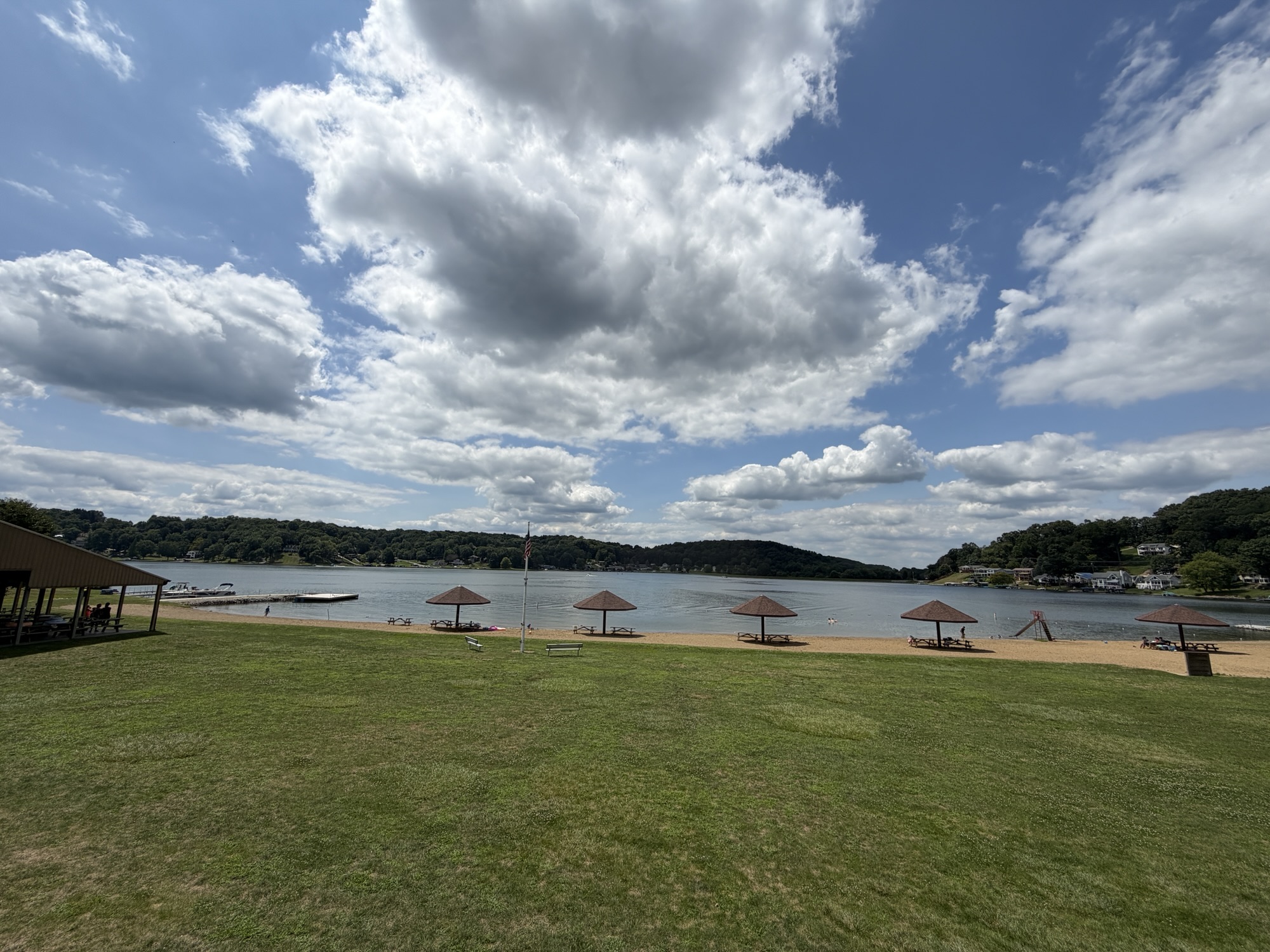
Lake color is looking excellent for this time of the season! Lake color is one of the quickest and easiest methods of determining how the lake is doing in terms of overall water quality. Green color indicates planktonic algae growth while brown color is more indicitive of suspended soil particles. There are some exceptions such as diatoms that can impart a golden brown color to the water especially in the spring. Diatoms for what it is worth produce nearly 50% of the world’s oxygen.
Don’t be surprised to see the lake become more green in color over the next several months as cyanobacteria (blue-green algae) become more dominant in the water column. This is a natural and expected change in the succession of phytoplankton that occurs in many lakes throughout the world. The duration and intensity of these “blooms” depends on the overall nutrient levels within the lake especially phosphorus and to a lesser extent nitrogen. The Ohio EPA sends out weekly satellite images of Ohio lakes that are experiencing algal blooms. That information can be accessed through the home page of this web site.


Aquatic Plant – Bass – Bluegill Connection
More on the Jone’s Fish Management Report
One important factor that I feel is missing from the Jone’s fish population study and ensuing discussions (June 20th Post)is the iimportance of adequate aquatic plant cover within Lake Mohawk. The Jone’s study basically concluded that the bass population is suffering and malnourished due to a lack of adequate sunfish (Bluegill) in the lake which is an important food source for the bass. The recommendation was to stock additional bluegill over the next several years. This in my opinion is an oversimplified recommendation that does not resolve the root cause for the imbalance in the first place. Another important finding was the crappie are over abundant in the lake and need to be harvested at a rate of over 12,000 crappie per year. Crappie compete with bluegill within the aquatic food web in addition to preying on young bluegill fry.
In summary, bass production within a lake is optimum when 36-40% of the lake has adequate aquatic plant growth (Wiley, et al 1984a).
NOTE 1: Many things can restrict aquatic plant populations including the drawdown process of lowering Lake Mohawk each season. This process exposes 3-4 feet of lake sediment that freezes the root system of many desirable native aquatic plants. Water clarity and depth also naturally can restrict plant growth. Over utilization of aquatic herbicides can also reduce aquatic plant populations below optimal levels. Paul Mickley is extremely judicious and consciencious in his select and minimal use of aquatic herbicides at Lake Mohawk.
NOTE 2: Aquatic plants not only provide cover from predation, they also create an environment for a healthy and abundant “macroinvertebrate” food base for the sunfish (bluegill). All important for the aquatic food web within Lake Mohawk.
Note 3: Aquatic plants are extremely important in minimizing toxic blue-green algae blooms. Aquatic plants compete for phosphorus and stabilize lake sediments which helps in the recycling of phosphorus into the water column. There is also some evidence that aquatic plants secrete inhibitory substances that reduce cyanobacteria (blue-green algae). In summary, a healthy aquatic plant population helps purify lake water.
Below (Figure 2) is a graph that illustrates the relationship of Percent Plant Cover to that of the Largemouth Bass and Sunfish population within lakes (productivity). In summary, as plant cover increases from left to right in terms of percent coverage of the lake, the largemouth bass productivity increases to a maximum when plant cover is between 36-40% (180 – 203 surface acres of Lake Mohawk). The sunfish (bluegill) population continues to rise in a linear fashion as plant cover increases.
Below is the AI summary of how this delicate food web works between the bass and bluegill. If you would like further explanation, please don’t hesitate to ask. GraysAquatic@gmail.com or text at 330.412.4139.

Piscivorous Largemouth Bass Production
- Low plant cover (<20%): Bass production is low because young bass lack structural refuge from cannibalism and macroinvertebrate food webs are less productive. [1, 2]
- Intermediate plant cover (20–40%): Optimal balance where Largemouth Bass Foraging and Habitat Success peaks; predator search times are minimized and encounter rates with prey are high.
- High plant cover (>50%): Bass production and condition factors decline sharply because dense stems reduce foraging efficiency and restrict movement, shielding forage fish.
Insectivorous Sunfish Production
- Low plant cover: Sunfish (like bluegill) production is limited by high vulnerability to predation, keeping population biomass lower or stunted. [1, 2]
- Moderate to high plant cover: Production remains high or positively correlated with macrophyte density because plants provide an abundant macroinvertebrate food base and safe refuge. [1, 2]
* Extreme vegetation (>80%): Dense choking weeds can prevent bass from thinning sunfish, leading to overcrowded, slow-growing small sunfish populations
“Oil” Reported in Lake Mohawk on NextDoor
NO need to worry!
Someone on NextDoor at Lake Mohawk recently reported what looked like to them “oil” in the north dam end of the lake. This concern also happened several years ago when black dark small spots were observed floating in the water column. While it is certainly possible that oil can get into the lake from many sources, the actual substance was discovered to be a of dark species of attached algae (in the blue-green family) that had broken off from the bottom and floated up into the upper water column. Sunlight penetrates lake water to a depth of about 3x the secchi disc reading which can easily be the 21 or so averafge feet that is common in the north end of the lake. Note: does not include the original narrow submerged stream depth of up to 33-34 ft..
